Lijnwaad (linen)
Explore records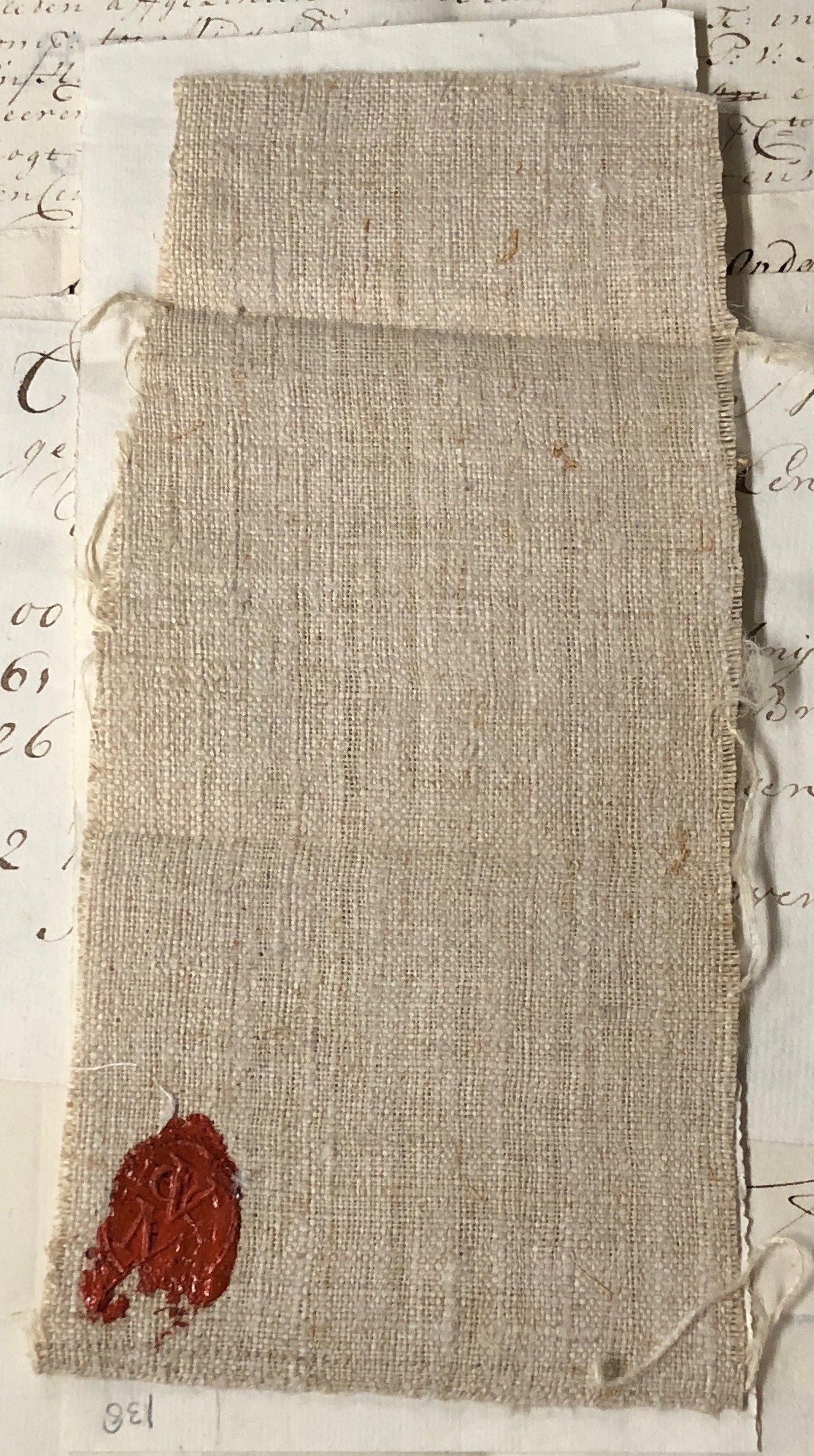
Definition
Lijnwaad applies to a category of European-made linens that were bleached, unbleached, half-bleached, colored, striped, checkered, or floral. Lijnwaad is often associated with its place of production, including Holland, France, Silesia and Osnabrück.
Related textiles
Context
The term lijnwaad refers to a broad category of linen cloths that were European-produced and varied in color, pattern, and quality. These linens were popular imports to Northern European mercantile centers and major trading posts in West Africa and the Americas. They were predominantly carried on West India Company and Middelburg Commercial Company ships. [1]
Lijnwaad could be shipped by the piece or by yardage. In our current data set of VOC, WIC and MCC invoices (1699–1780), the cloth ranges in price from 3.5 stuivers–36.8 guldens per piece, or 3.5–17 stuivers per el, with Osnabrück linens usually being the cheapest and “fine Holland linens” the most expensive. Linens from Osnabrück were made from coarse unbleached flax or hemp, while those from other regions like Holland, France and Silesia were bleached and of higher quality. [2] Although some swatches and cargo list entries from VOC and WIC ships indicate that lijnwaad could be striped, checkered or floral, patterned lijnwaad seems to be relatively uncommon. [3] While the color of exported lijnwaad is sometimes identified as blue, grey, green, white (probably bleached), or natural (unbleached or raw) the vast majority of entries in the WIC and MCC invoices leave color unspecified. Lijnwaad is instead typically modified by its place of origin, with “Osnabrug” (Osnabrück), “Frans” (France), “Sileziger” (Silesia), “Vlaams” (Flanders), “Haarlem,” and “Rouaens” or “Rouaans” (Rouen) emerging most frequently in the records. Additionally, entries for lijnwaad in MCC invoices are often accompanied by numbered values and differing “sorts” (for example: first and second, best and middle), which differ in price and may correspond to varying degrees of quality or grades.
Lijnwaad originated from Northern European production centers in the Netherlands, France, England and the Eastern European regions of Silesia and Westphalia. It was made of flax or hemp fibers that were harvested, cleaned and separated before being spun into yarn and woven into cloth with a plain, twill (diagonal) or damask (satin) weave. [4] Once woven, linen might be bleached in a process that involved boiling the cloth in water with lime and soap, soaking the fabric in buttermilk, and laying the linen outside on the grass to dry and whiten. Linen cloths could go through the cycle of washing, soaking and drying several times in order to achieve the appropriate level of whiteness. [5]
Before 1585, the finest quality linens were found in Flanders, with specialists in linen damask manufacture being based in the cities of Cambrai and Courtrai. [6] The fall of Antwerp to the Habsburgs subsequently prompted the emigration of Flemish weavers and merchants to Holland. Linen production soon became a major industry in the Dutch Republic, with Haarlem constituting the preeminent center for its weaving and bleaching in the Northern Netherlands. [7] While the Dutch played an active role in the bleaching of linen, it is difficult to assess whether the “Haarlem” or “Holland” lijnwaad listed in WIC and MCC invoices was produced in the Dutch Republic. Much of the spun flax used in the production of these linens was imported from Silesia, where the local, mountainous climate enabled the cultivation of linen fibers, and the cost of production was cheap due to feudal labor systems. [8] Linens bleached in Haarlem and Holland’s other textile centers were also frequently imported from other regions of Europe. [9]
Whether bleached in Holland or purchased from other European suppliers, lijnwaad was an important commodity in domestic and foreign markets. WIC and MCC ships exported lijnwaad in large quantities to West Africa (Arguin/Mauritania, the Guinea Coast, Angola, Elmina, and Allada) and the Americas (Guiana and the Spanish West Indies), although a few examples also circulated from the East Indies (Batavia) and the Cape of Good Hope back to the Netherlands. Based on the current data set, Osnabrück and Flemish linens were the most frequently exported types of lijnwaad. For instance, 61,399 els of Osnabrück lijnwaad and 21,937 els of Flemish (‘ Vlaams ’) lijnwaad were shipped on the MCC ship Beurs van Middelburg in 1734 alone. [10]
In the Dutch Republic, linen served both utilitarian and decorative purposes. As banqueting scenes such as Dirck Hals’ (att.) An Outdoor Party (c. 1620) and Jan Steen’s The Dancing Couple (1663) demonstrate, linen tablecloths and napkins of varying qualities were ubiquitous in dining and domestic settings across social classes. [11] Linen also served as the primary material employed in the making of underclothes like breeches (see, for example, Hendrik Casimir’s Underpants, 1630–40) and smocks, and bed sheets.
In the broader global landscape, lijnwaad played a critical role as a barter commodity at Dutch trading outposts in West and West-Central Africa. In kingdoms on the Guinea Coast, the Bight of Benin, and Luango-Angola, linen cloth was employed as a type of clothing for indigenous peoples across social classes, becoming adapted into pre-existent conventions for styles of dress. [12] Plain-woven, unbleached European linens shared some material and visual characteristics with local West African textiles that used fibers like bast and raffia, although the quantity of linen imported into each region depended heavily upon local market demands. [13] As early as the first decade of the seventeenth century, Pieter de Marees’ Beschrijvinghe ende historische verhael vant gout koninckrijck van Guinea (1602), the first illustrated Dutch-authored monograph on sub-Saharan Africa, underlined the importance of linen to the gold trade: “We bring them large amounts of Silesian Linen, which sells there in great quantities, because they clothe themselves with it and it is the most popular cloth which they use to wear.” [14]
De Marees’ description confirms that the Dutch relied upon cheaper, but durable linens imported from Silesia in order to fulfill the demand for these textiles in Africa and the Americas. [15] Though the text’s printed illustrations of the local inhabitants of the Gold Coast make it difficult to identify specific types of textiles, linen makes up the cloth wrapped around the body of the Brenipono (Nobleman) depicted in the Beschrijvinghe’s second plate. Colleen Kriger has observed that linen imported by the yard was preferred to pre-sewn or fitted garments, and that consumers on the Guinea Coast would purchase lengths of fabric that could be cut down to the “proper size for making wrappers, shawls and underclothes.” [16]
Linen was also popular in colonial Brazil, presumably because its light weight made it a desirable material for clothing in tropical climates. In fact, linen garments may appear in Albert Eckhout’s so-called ‘ethnographic’ portraits of the Brasilianen/Tupinamba Woman (c. 1641) and Brasilianen/Tupinamba Man (c. 1641). [17] Eckhout may have also sought inspiration from period linens in his representations of a Mulatto Man (c. 1641) and Mameluca Woman (c. 1641) from the same series. [18]
Hannah Prescott (November 2024)
Notes
- [1]
VOC ships between 1699–1700 note that Chinese (“Chinees Lywaet”) samples circulated from Jakarta to the Netherlands, but it is unclear whether or not this “Chinese linen” relates to lijnwaad as described here. KB_Delpher_1700-29-06_Amst; KB_Delpher_1700-10-8_Haer.
Back to text - [2]
Giorgio Riello and Prasannan Parthasarathi, eds., The Spinning World: A Global History of Cotton Textiles, 1200–1850 (Oxford: Oxford University Press & Pasold Research Fund, 2009), 416.
Back to text - [3]
For striped, see 1000525, WIC_1.05.01.02_1288_319-321; for checkered, see 1000851, WIC_105.01.02_1290_231-232; for floral, see 1000852; WIC_1.05.01.02_1290_231-232.
Back to text - [4]
David Mitchell, “Linen Damask Production: Technology Transfer and Design, 1580-1760,” in The European Linen Industry in Historical Perspective, eds. Brenda Collins, Philip Ollerenshaw (Oxford: Oxford University Press, 2003), 61; Eliza B. Thompson, Cotton and Linen (New York: The Ronald Press Company, 1922), 101.
Back to text - [5]
Linda Stone Ferrier, Images of Textiles: The Weave of Seventeenth-Century Dutch Art and Society (Ann Arbor: UMI Research Press, 1985), 126; Thompson, Cotton and Linen, 102.
Back to text - [6]
Stone Ferrier, Images of Textiles , 74.
Back to text - [7]
Stone Ferrier, Images of Textiles , 57.
Back to text - [8]
Steffen, “A Cloth that Binds,” 107, 110–112.
Back to text - [9]
Stone Ferrier, Images of Textiles, 125; Horner, The Linen Trade, 355. As Joseph Marshall would write in his Travels through Holland (1768): Dutch textile merchants “appropriate to themselves foreign manufactures which they buy in Westphalia, in the country of Juliers, in Flanders, and in Brabant, and which, being bleached at Haarlem, are offered in commerce under the name of Dutch linens. Quoted in John Horner, The Linen Trade of Europe during the Spinning-Wheel Period (Belfast: M/Caw, Stevenson & Orr, Ltd., 1920), 355.
Back to text - [10]
For Osnabrück lijnwaad, see MCC 233.6_85, 87-89; for Flemish lijnwaad, see MCC 233.6_89-90.
Back to text - [11]
On domestic linens, see C.A. Burgers, “some Notes on Western European Table Linen from the 16 th through the 18 th Centuries,” in Upholstery in America and Europe from the Seventeenth Century to World War I, ed. Edward S. Cooke (New York: W.W. Norton & Company, 1987), 149–162; Sanny de Zoete, “Laying the Table,” in Class Distinctions: Dutch Painting in the Age of Rembrandt and Vermeer, ed. Ronni Baer (Boston: Museum of Fine Arts Publications, 2015), 78–87.
Back to text - [12]
Anka Steffen, “A Cloth that Binds: New Perspectives on the Eighteenth-Century Prussian Economy,” Slavery & Abolition Vol. 42, No. 1 (2021): 106. K. Ratelband, Vijf Dagregisters van het Kasteel Sao Jorge da Mina (Elmina) Aan de Goudkust (1645–47) (The Hague: Martinus Nijhoff, 1953), cv. Colleen Kriger has discussed the ways in which linen was worn among varied types of consumers along the Gold and Slave Coasts. On the Guinea Coast, fashionable men wore imported linen cloth alongside cotton kannekins from India; in the Fetu kingdom, a broad quality of linens were worn by both poor and wealthy members of society. See Kriger, Cloth in West African History (Oxford: AltaMira, 2006), 37–39.
Back to text - [13]
Carrie Anderson has recently used data taken from WIC shipping invoices to address the export patterns of linen between Ghana, Benin and Angola. The amount of imported linen depended upon the tastes and needs of local consumers. In Angola, for instance, Dutch linen was imported in far fewer quantities because consumer needs for plain-woven cloth was already satisfied by the local production of raphia cloth. See Anderson, “From Bedsheets to Bandages: Lost Linens of the Early Modern Dutch Atlantic World,” in Nonextant Art and the Early Modern World, ed. Dana E. Katz and Dawn Odell (volume in progress).
Back to text - [14]
Pieter de Marees in Albert van Dantzig and Adam Jones, eds., trans., Description and Historical Account of the Gold Kingdom of Guinea (Oxford: Oxford University Press for the British Academy, 1987), 51–53. Elizabeth Sutton has discussed how the images in de Marees’ account negotiate between empirical, “ethnographic” approaches to representation and the European allegorical tradition, articulating cultural difference through the inclusion of foreign objects, hairstyles and clothing that reaffirm the author’s account and his status as an eyewitness to the customs of local peoples. See Sutton, Early Modern Dutch Prints of Africa (Burlington, VT: Ashgate, 2012), 60.
Back to text - [15]
The Dutch were responsible for shipping around 200,000 els of Silesian linens to the Gold Coast between 1593–1607. See Victor Enthoven “Early Dutch Expansion in the Atlantic Region, 1595-1621,” in Riches from Atlantic Commerce: Dutch Transatlantic Trade and Shipping, 1585–1817, eds. Johannes Postma and Victor Enthoven (Boston: 2003), 39; J.K.J. de Jonge 1871, 10, 32. Anka Steffen has also observed that serfdom, a system in which “underprivileged manufacturers” were required to spin yarn and weave linen in order to survive, played a major role in enabling Silesian merchants to sell their linens at such reduced costs. See Steffen, “A Cloth that Binds,” 107–115.
Back to text - [16]
Kriger, Cloth in West African History, 37.
Back to text - [17]
Linen could be traded, but it might also be given to indigenous Brazilian peoples as gifts. As Caspar Barlaeus notes in his 1647 Rerum per octennium in Brasilia, Johan Maurits sought to solidify alliances with the Tarairiu people by gifting them “linen clothing, garments for women, knives, bells, glass trinkets, beads” and other objects that were popular among the indigenous peoples of Brazil. See Caspar Barlaeus, The History of Brazil under the Governorship of Johan Maurits, trans. Blanch T. van Berckel-Ebeling Koning (Gainesville: University of Florida, 2011), 72. See also Carrie Anderson, “Mapping Colonial Interdependencies in Dutch Brazil: European Linen & Brasilianen Identity,” Artl@s Bulletin Vol. 7, Issue 2 (2018): 56–70; Anderson, “Material Mediators: Johan Maurits, Textiles, and the Art of Diplomatic Exchange,” Journal of Early Modern History Vol. 20 (2016): 67–69.
Back to text - [18]
Rebecca Brienen characterizes the shirt and skirt worn by the Mulatto Man, and the long dress worn by the Mameluca Woman as white cotton, deriving her assessment from the caption (“Normally, they wear long and beautiful white cotton shirts during the week”) that accompanies Zacharias Wagener’s copy of Eckhout’s paintings in his Thierbuch. Brienen, Visions of Savage Paradise: Albert Eckhout, Court Painter in Colonial Brazil (Amsterdam: University of Amsterday Press, 2007), 163. However, the clothing that appears on the bodies of these two figures may derive from linen underclothing. The Mameluca Woman’s dress in particular, with its lace embroidery on the shoulder, is reminiscent of the linen smocks worn by Dutch women in the seventeenth century.
Back to text
Visual evidence
A swatch of lijnwaad
This swatch of lijnwaad was attached to a letter carried on the MCC ship Eendracht around 1740. This swatch is an unbleached (natural), plain weave fabric. The ship was headed to the Americas.
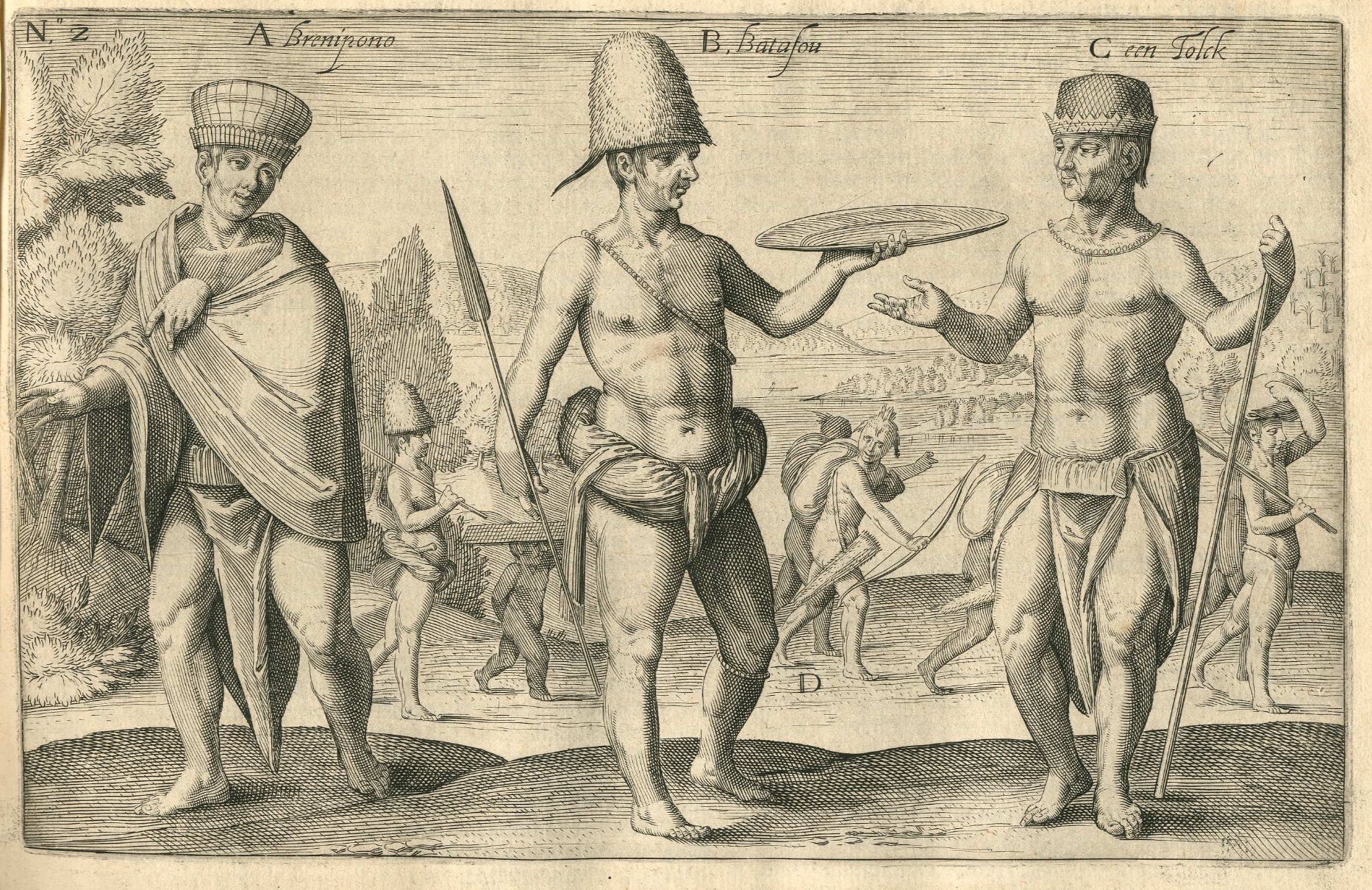
Plate 2 from Pieter de Marees’ Beschrijvinghe ende historische verhael vant gout koninckrijck van Guinea (Amsterdam: Cornelis Claesz, 1602)
This plate from Pieter de Marees’ represents three West African figures who played a critical role in facilitating trade with Dutch merchants on the Gold Coast. The print’s accompanying description reveals that the Brenipono, or nobleman (pictured on the left), wears a linen mantle. Among West African consumers, linen cloth and clothing could reflect one’s elevated status and access to imported goods.
Related works 9
A swatch of lijnwaad
c. 1640Pillowcase
c. 1670–1770An Outdoor Party
c. 1620–1635The Dancing Couple
1663Underpants of Hendrik Casimir
1630–1640“Laken” or bed sheet
c. 1700–1799Plate 2 from Pieter de Marees’ Beschrijvinghe ende historische verhael vant gout koninckrijck van Guinea (Amsterdam: Cornelis Claesz, 1602)
1602Brasilianen Man
c. 1641Brasilianen Woman
c. 1641Quantitative record
Textiles, Modifiers, and Values
96 trade records
Explore specific textiles in greater detail, like the quantities, total values, or per-piece values of imported or exported textiles over time or across geographies.
Top destinations